
What a battery can do for your home
Homeowners use batteries in three ways. Most systems are set up for one, or a combination.
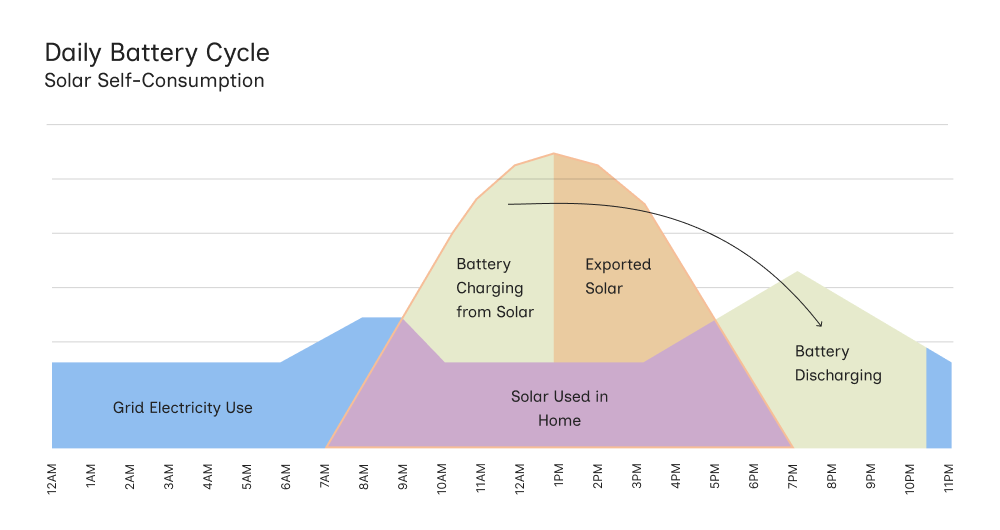
Reduce how much electricity you buy from the grid
Your solar panels often produce more than your home needs during the middle of the day. Instead of sending that surplus to the grid, a battery stores it and supplies your home in the evening and overnight. You buy less electricity overall. Systems set up this way typically cycle the battery once a day for most of the year.
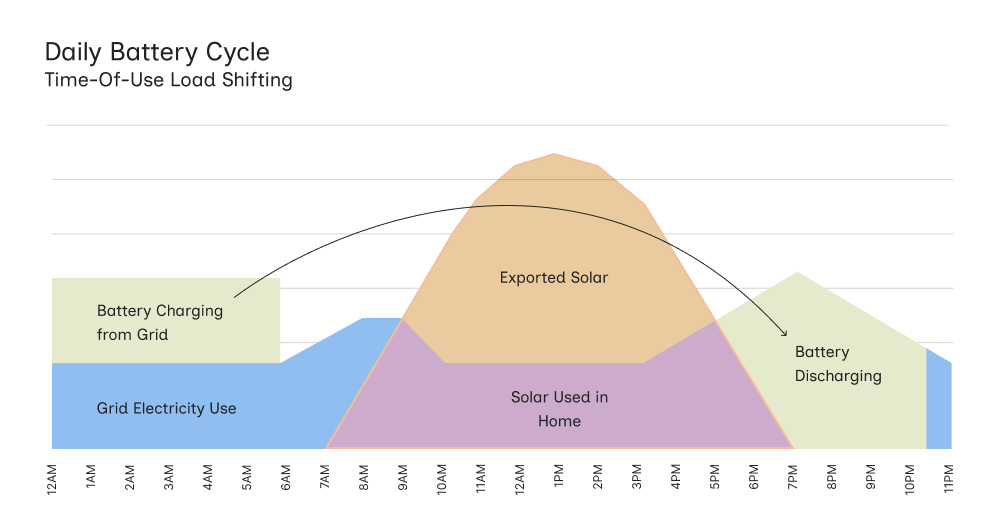
Shift your electricity use to cheaper hours
Ontario's time-of-use pricing charges more for electricity during peak hours. A battery can charge overnight when rates are lowest and supply your home during peak-rate periods, reducing the cost of the electricity you do buy from the grid. These systems are typically sized to cover your home's peak and some mid-peak hours.
Keep the lights on during outages
A battery can power critical loads - fridge, freezer, furnace fan, a few lights - when the grid goes down. Without a battery, a grid-connected solar system shuts off automatically during outages to protect hydro workers. Backup systems are typically sized to last a day or two on essential loads, not to run your entire home.
A common assumption is that solar panels with a battery will power your entire home indefinitely during an outage. They will not. That would require a very large battery and a solar system designed to recharge it even during the lowest-production months. The smaller the load you put on the battery during an outage, the longer it lasts.
Can a backup battery also save you money?
If your battery sits fully charged waiting for an outage, you can also use part of its capacity for daily time-of-use shifting. The trade-off: during a shifting cycle the battery depletes and needs to recharge. If the power goes out during that window, your backup is reduced.
To manage this, you can reserve a portion of the battery's capacity for backup while the rest cycles daily. This may mean a larger battery. Your solar installer will help you find the right balance and program the battery accordingly.
The net metering trade-off
Most of this resource hub focuses on the most common residential solar setup in Ontario: grid-connected panels without batteries, using net meteringA solar system configuration that allows excess solar electricity to be sent to the grid in exchange for hydro bill credits. These credits can then be used to offset future electricity imports. In Ontario, unused credits expire after 12 months.. Batteries change the picture in one important way.
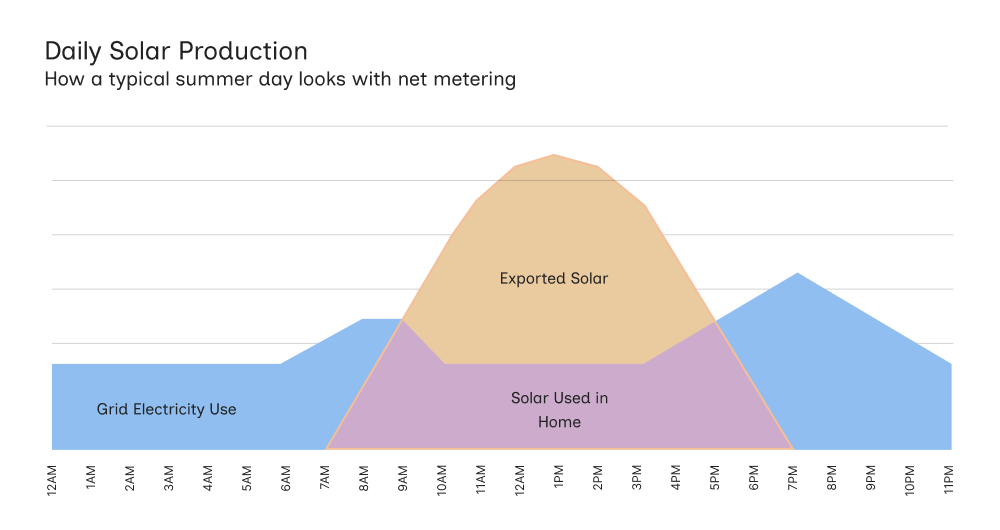
Ontario's Home Renovation Savings Program (HRSP) offers rebates of up to $5,000 for solar ($1,000/kW) and $5,000 for battery storageA system that stores solar electricity for later use, typically during power outages. Batteries are optional and are not required for net-metered solar systems. ($300/kWh). But if you take the HRSP solar rebate, your system is not eligible for net meteringA solar system configuration that allows excess solar electricity to be sent to the grid in exchange for hydro bill credits. These credits can then be used to offset future electricity imports. In Ontario, unused credits expire after 12 months.. Any excess electricity you export to the grid receives no credit on your hydro bill.
Battery systems paired with the rebate usually have weaker long-term financial performance than net-metered systems without batteries, even after accounting for the rebate. Net-metered systems without batteries typically pay back in 12-18 years. Batteries may still be the right choice if you want backup power, want to reduce grid dependence or have high evening electricity use.
For full HRSP details, see Government Financing and Incentive Programs in the Costs and Financing section.
For how net meteringA solar system configuration that allows excess solar electricity to be sent to the grid in exchange for hydro bill credits. These credits can then be used to offset future electricity imports. In Ontario, unused credits expire after 12 months. works, see Understanding Your Bill Under Net MeteringA solar system configuration that allows excess solar electricity to be sent to the grid in exchange for hydro bill credits. These credits can then be used to offset future electricity imports. In Ontario, unused credits expire after 12 months..
For a side-by-side comparison of net meteringA solar system configuration that allows excess solar electricity to be sent to the grid in exchange for hydro bill credits. These credits can then be used to offset future electricity imports. In Ontario, unused credits expire after 12 months. vs. the HRSP rebate, see Solar Setup Options.
Important considerations
Financial savings and backup power work against each other
A battery can be optimized for daily bill savings or backup capability, but not both at full capacity. Prioritizing savings means cycling the battery daily, which means it may be partially drained when an outage occurs. Prioritizing backup means reserving capacity that sits idle, reducing the daily savings available.
The right setup depends on whether your priority is financial return or resilience.
Backup power is not unlimited
How long your battery lasts during an outage depends on battery size, how full it was when the outage started, weather and solar production during the outage, and how much electricity your home draws.
Heavy loads - electric heating, ovens, dryers, hot tubs, EV charging - drain a battery quickly. Most battery systems are designed to back up critical loads, not the entire home. Whole-home backup is possible but usually requires a larger, more expensive system.
Seasonal limitations
During a summer outage, longer days and stronger solar production may let your panels recharge the battery, extending how long you have power. During a winter outage, shorter days, snow cover and consecutive cloudy days can limit recharging, which is when backup power is often needed most.
Battery degradation and warranty
Batteries lose capacity over time and come with cycle and capacity warranties. Before committing, consider the warranty length, how much capacity is guaranteed to remain, the cost of eventual replacement, and how the battery's expected useful life compares with the projected payback periodThe length of time it takes for hydro bill savings to equal the upfront cost of a solar system.. A battery with an 18-year payback that needs replacement after 15 years offers limited financial value.
Are batteries right for you?
Most homeowners who add battery storageA system that stores solar electricity for later use, typically during power outages. Batteries are optional and are not required for net-metered solar systems. do so for backup power or greater independence from the grid, not because batteries improve their financial return. A few situations where a battery may also save money:
Small roof, high electricity use. You cannot offset enough consumption through net meteringA solar system configuration that allows excess solar electricity to be sent to the grid in exchange for hydro bill credits. These credits can then be used to offset future electricity imports. In Ontario, unused credits expire after 12 months. alone, so storing and using your own production is more valuable.
High evening consumption. You already benefit from ultra-low overnight (ULO) rates, often because you charge an EV or plug-in hybrid overnight, and a battery lets you shift more use to those cheap hours.
Your HSA Advisor will let you know if your consumption profile and roof make storage financially worthwhile.
A note on off-grid systems
Everything above applies to homes connected to the grid. Fully off-gridA solar system that is not connected to the electrical grid. Off-grid systems rely on batteries and often a backup generator and are typically used in remote or seasonal properties. solar and battery systems, where you disconnect from the grid entirely, are expensive, complex to design and require ongoing monitoring. They are a lifestyle choice, not a cost-saving measure, and are typically practical only for remote properties without grid access. This section does not cover off-gridA solar system that is not connected to the electrical grid. Off-grid systems rely on batteries and often a backup generator and are typically used in remote or seasonal properties. systems.
Batteries vs. generators
Home backup batteries cost more upfront than a portable generator and require professional installation. They also operate quietly, produce no emissions, need no fuel and recharge from your solar panels. For homeowners who want backup power without the noise, exhaust and ongoing fuel costs of a generator, a battery is the alternative.